
Thank you for Subscribing to Semiconductor Review Weekly Brief
× 
Semi Conductor Review Weekly Brief
Be first to read the latest tech news, Industry Leader's Insights, and CIO interviews of medium and large enterprises exclusively from Semi Conductor Review
ALLTEC Angewandte Laserlicht Technologie GmbH has been recognized by Semiconductor Review Magazine as the exclusive recipient of “Top Rugged Military SSD Drive Manufacturer 2026,” based on our proprietary methodology, reflecting its position in the industry, and is also named among “,” reflecting its broader leadership. This profile has been developed by the Semiconductor Review research and editorial team based on insights from an interview with Viola Kirk, Campaign Manager.



ALLTEC Angewandte Laserlicht Technologie GmbH
How Process Selection Impacts Overall Production
 Viola Kirk, Campaign Manager
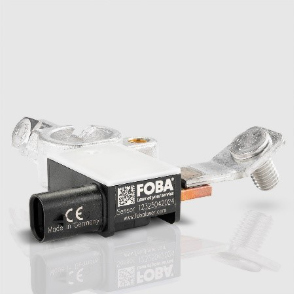 An example illustrates how the choice of a marking process can affect day-to-day production: On a production line for sensor housings, Data Matrix codes can no longer be read consistently at an inspection station. Individual parts have to be checked, increasing effort and delaying production. Root cause analysis reveals that the issue lies with the marking itself. The code, applied using an ink-based method, loses contrast due to cleaning steps and mechanical stress.
The key lesson: Marking is an integral part of the overall manufacturing process. The mark determines whether automated production steps and inspections run reliably and whether products remain traceable. "What matters is not readability immediately after marking, but its stability throughout the entire process chain and beyond." summarizes Damian Zawadzki, Product & Application Manager at FOBA.
Labeling, ink and pad printing are established and cost-effective solutions in many applications. They offer advantages for specific color and design requirements or extremely high line speeds. However, they also have limitations, as the marking is created as an additional surface layer. Factors such as cleaning, abrasion, UV exposure, or temperature fluctuations affect this layer, compromising contrast and readability.
Thinking Beyond the Mark: Workflow Instead of Isolated Steps
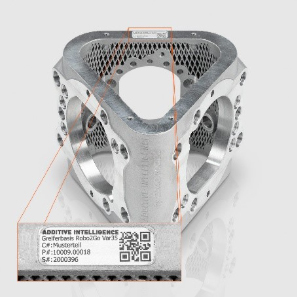 Laser technology for direct part marking (DPM) is gaining importance, particularly in electronics and automotive industry. Rather than applying a mark to the surface, laser marking generates it directly within the material.
Modern laser systems enable precise, material-friendly marking for demanding applications, as Damian Zawadzki confirms: "In our application laboratories, we test many products for our customers. Innovations in laser technology make it possible to mark even sensitive materials with high contrast and minimal heat input. In addition to the laser source, selecting the right parameters is critical for marking quality." For engineering plastics used in sensor housings or connectors, new UV lasers can produce high-contrast codes even on low-absorption or dark surfaces.
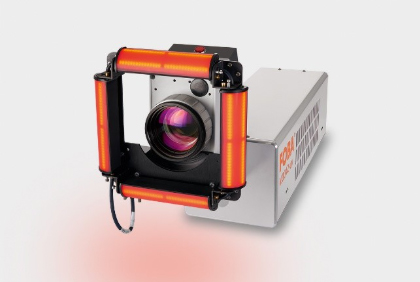
Laser marking differs from conventional methods not only in how the mark is created. The real distinction lies in the process design. At FOBA, laser marking is embedded within an end-to-end workflow that combines automatic mark alignment, verification, and code reading into a single process: A vision system identifies the part position, precisely aligns the content, and verifies the result immediately after marking.
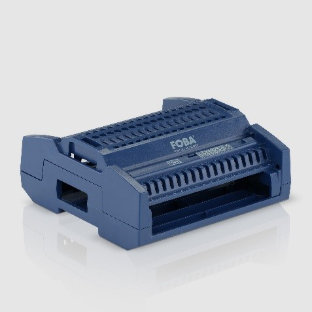 Integrated camera technology and MarkUS software compensate tolerances while monitoring quality criteria during production. A decisive advantage is the direct integration of the vision system into the marking head. "Think of the camera and the laser beam as sharing the same line of sight to the product. This avoids distortions and achieves extremely high reliability," explains laser expert Zawadzki. Both laser and vision functions are controlled through a common software environment, simplifying operation.
Is Switching to Laser Marking Worth It?
Switching to laser marking pays off when you look at the bigger picture: An end-to-end marking workflow, such as the FOBA workflow, has a positive impact on production. It contributes to reliable readability, reduced manual intervention, and lower scrap rates. Traceability improves through automated reading, inspection, and processing of marking data.
Additional savings result from reduced rework, less unplanned downtime, and more stable inspection processes. Refilling, drying times, and the need for consumables are also eliminated, with sustainability benefits.
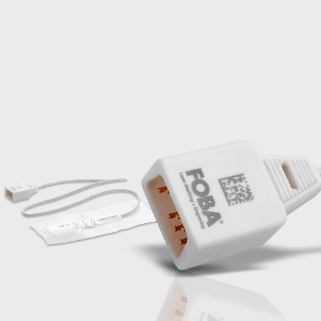 Investment costs are often the first consideration when evaluating laser marking. While the initial investment is typically higher than for conventional printing technologies, this perspective captures only part of the picture. "Laser marking is often underestimated because it initially appears more expensive," says Zawadzki. "In practice, however, it proves its worth especially where processes must run consistently and where identification is a critical factor."
The Bigger Picture: A Process Decision
Choosing a marking method is a process-level decision with implications for quality, cost-effectiveness, sustainability, and the long-term viability of the entire production operation.
 Whether switching to laser marking is worthwhile cannot be determined by investment costs alone. Printing and labeling remain a valid choice for many applications. However, once marking becomes a critical component of process quality, laser technology offers clear advantages. This is especially true when parts must remain traceable, codes readable, and workflows stable.
For companies considering this step, a structured approach is recommended. Requirements should include not only marking quality but also production stability, automation, and compliance. Existing processes can then be evaluated for limitations during production and product use. Before transitioning, companies should test under real-world conditions on original parts reflecting the whole process chain.
This content is copyright protected
However, if you would like to share the information in this article, you may use the link below: